
There are many attributes of vinyl that all work together to create more sustainable products across various applications. PVC is more durable than many other materials in construction, building, and infrastructure applications. This durability allows for a longer useful life than many alternatives, as well as reduced need for repairs, which helps cut down on greenhouse gas emissions throughout the full life cycle of the product.
PVC and United Nations Sustainable Development Goals (SDGs)
PVC products also directly contribute to achieving numerous United Nations SDGs. Without PVC products, goals related to good health and wellbeing, clean drinking water, sustainable cities and communities, and responsible consumption would be difficult, if not impossible, to achieve. To learn more about the ways PVC helps achieve UNSDGs, click here.
PVC and Circularity
The vinyl industry is also committed to growing and improving the circularity of our products. With help from the Vinyl Sustainability Council, the industry is working to transition from a traditional linear economy (make, use, dispose) to a circular one (make, use, recycle). Learn more about the circularity story for PVC here.
PVC and Life Cycle Assessment Improvements
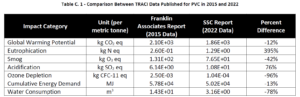
The Vinyl Institute has worked with Sustainable Solutions Corporation to conduct and release life cycle assessments for the industry and VI members. When comparing the most recent LCA to the previous one in 2015, the findings show an industry improving its sustainability record across several metrics, including a 12% decrease in global warming potential. You can see the full findings and comparisons in the image below.
PVC and Recycling
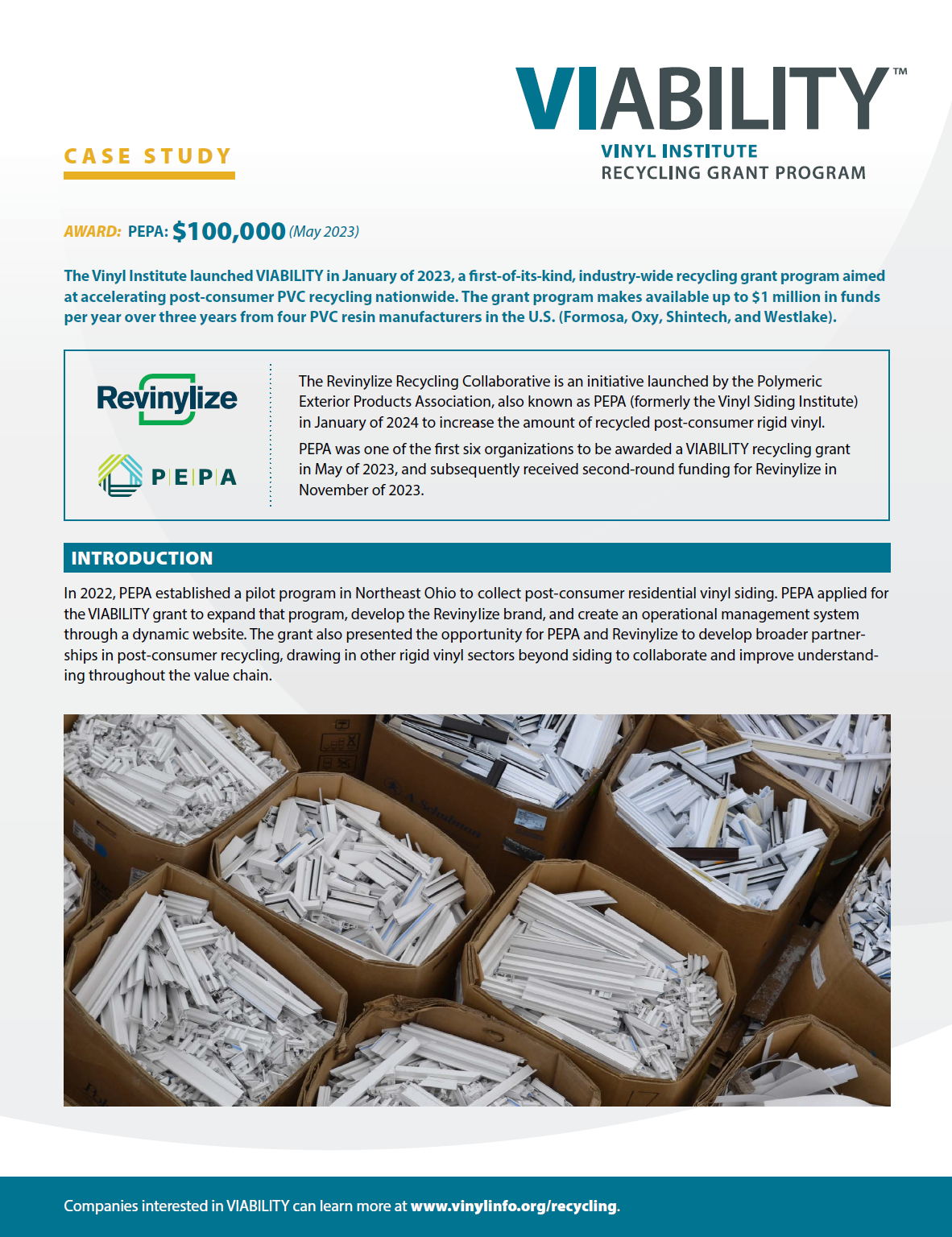
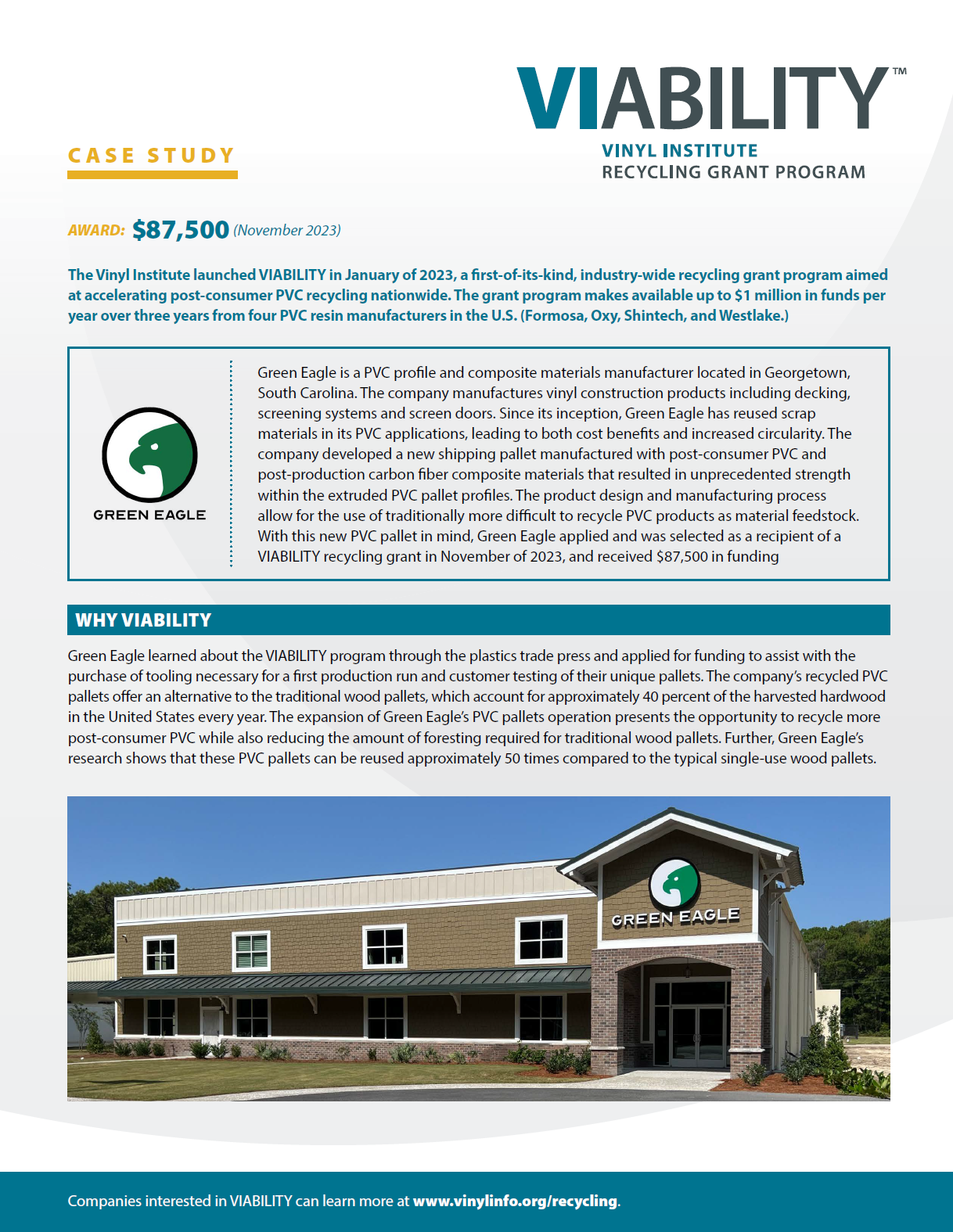
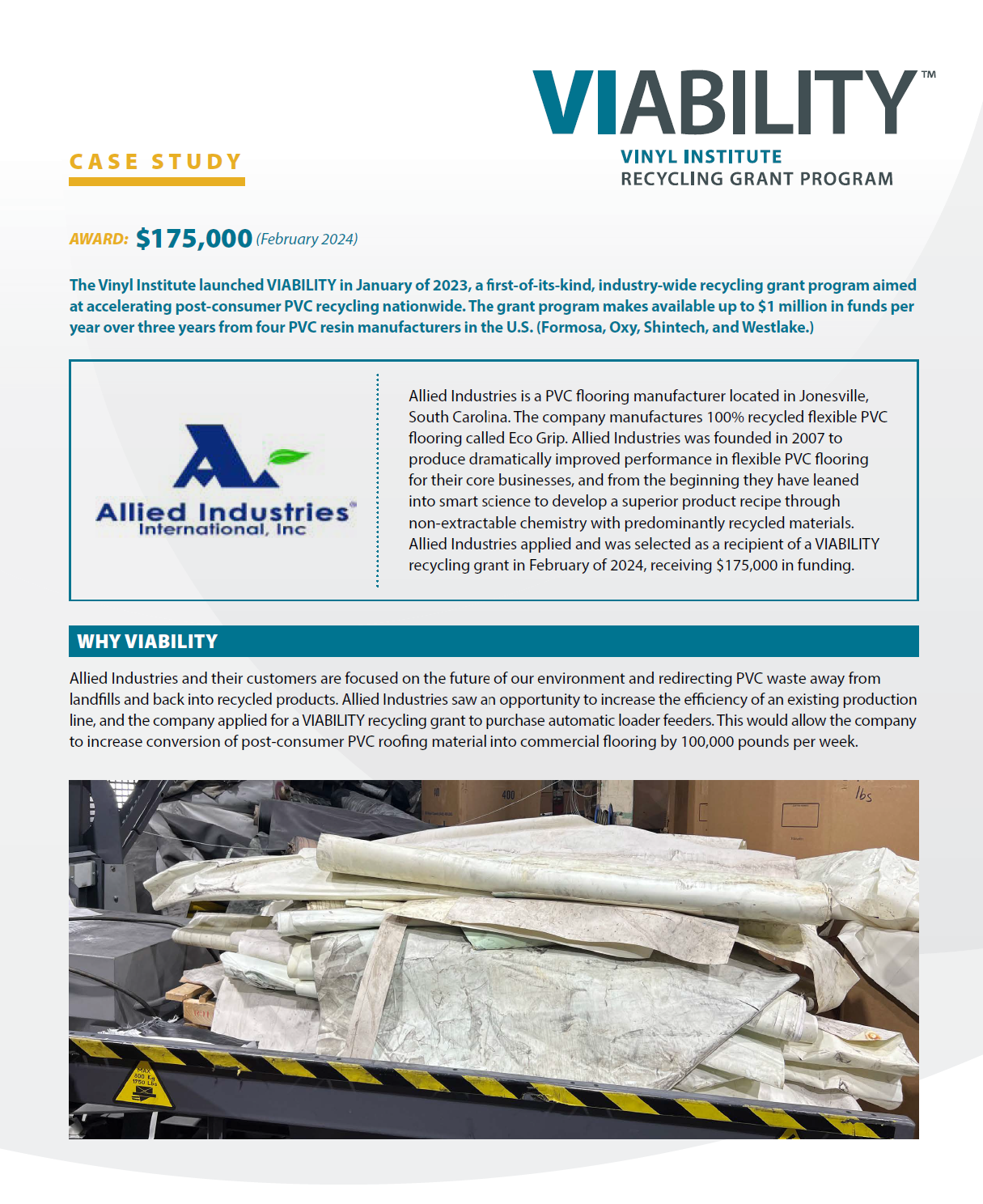
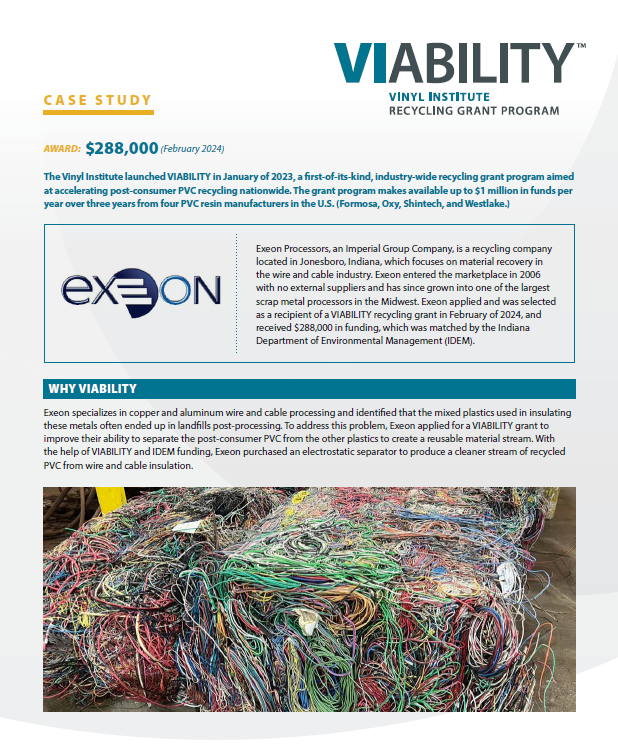
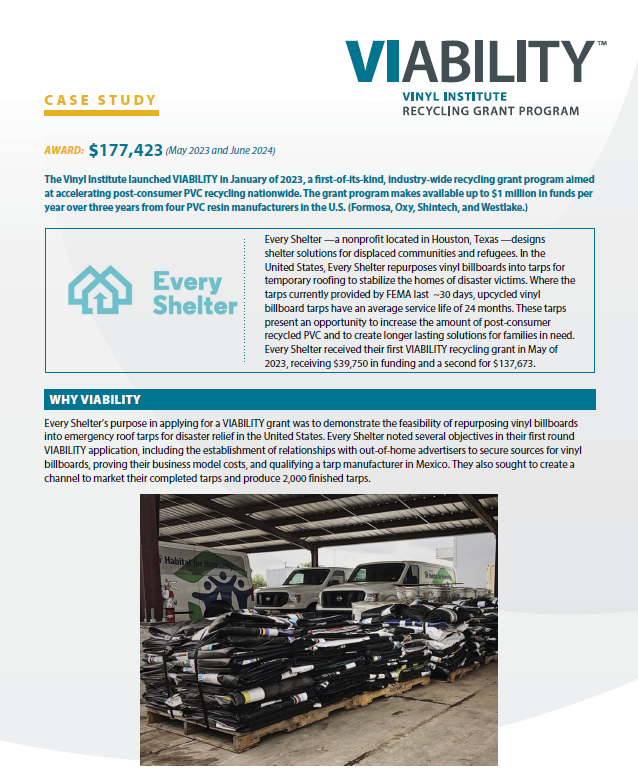
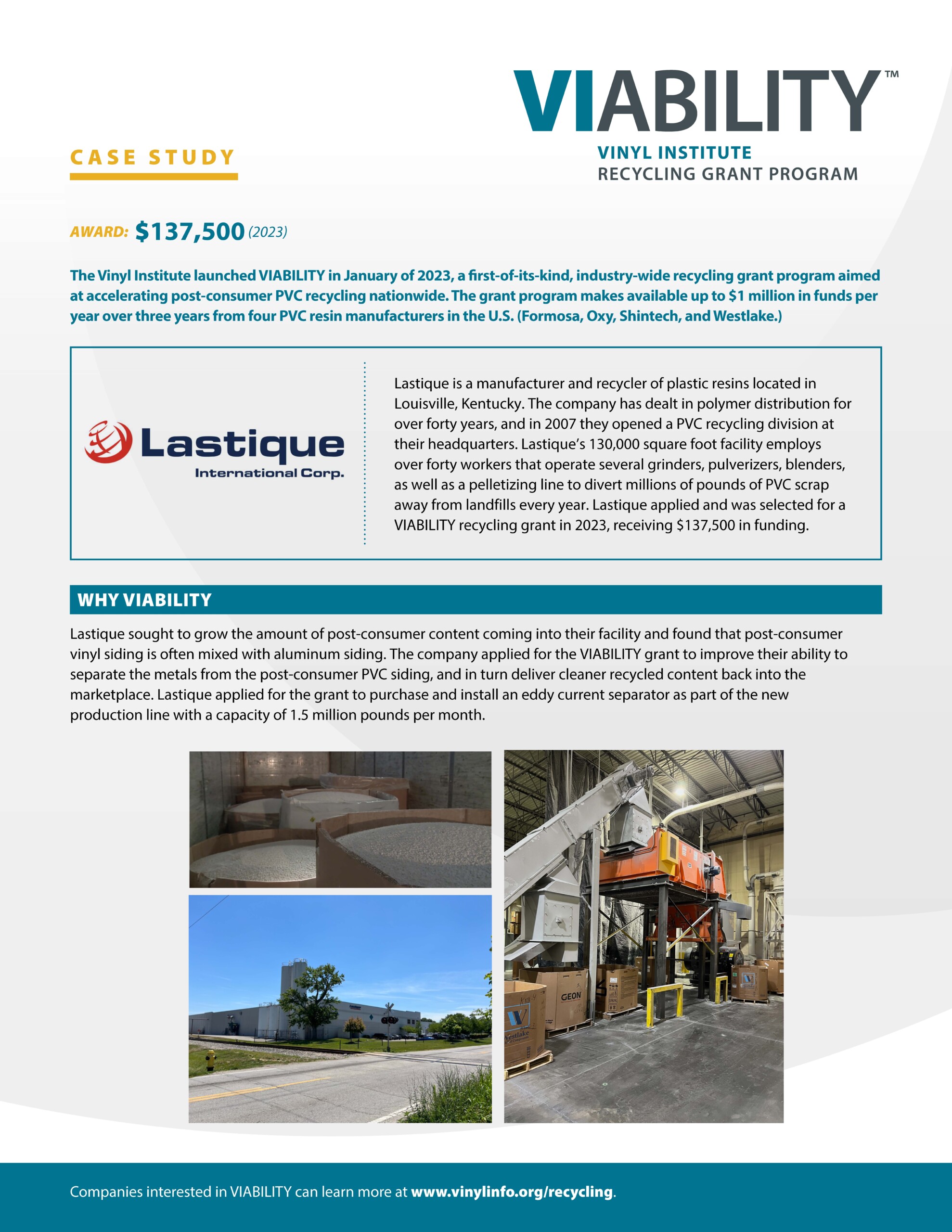
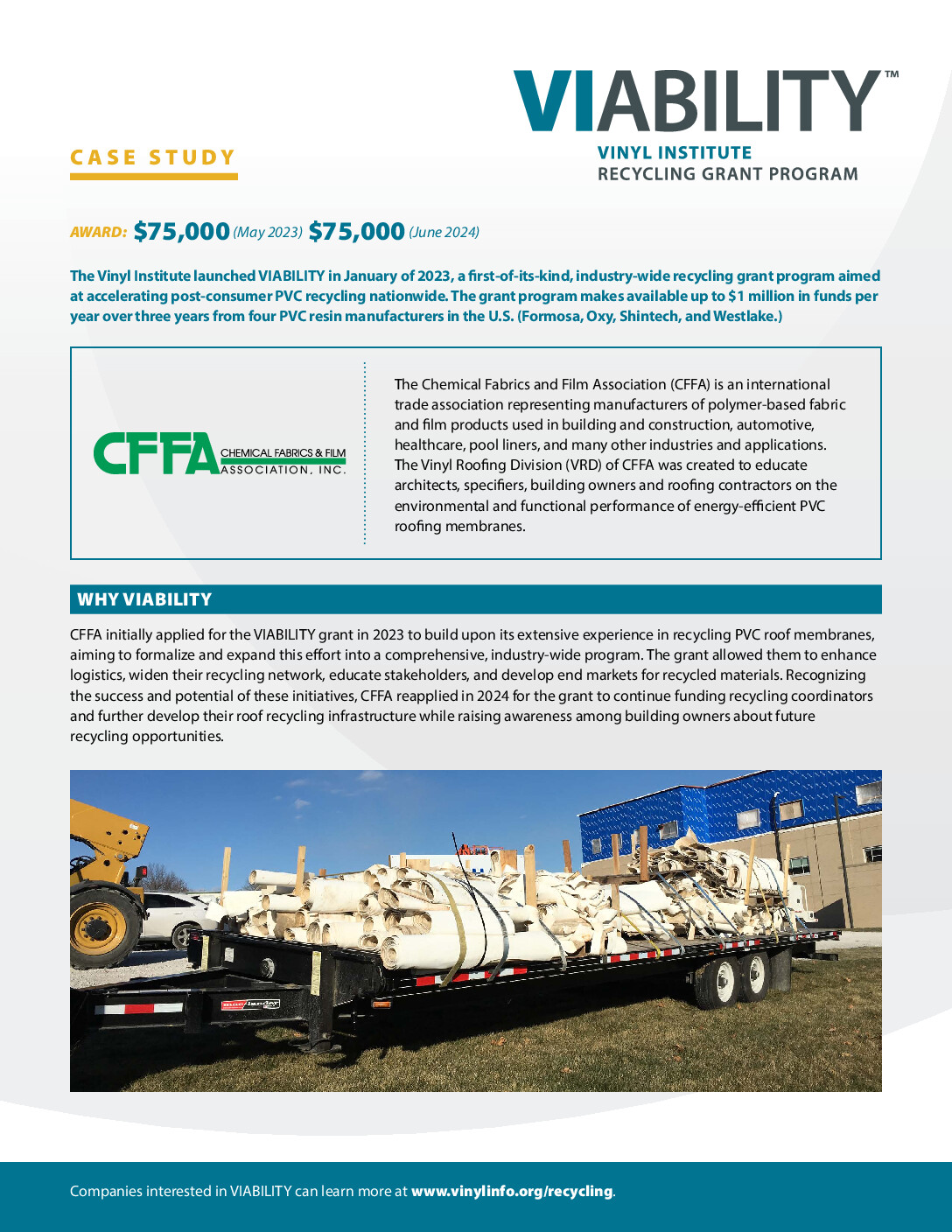
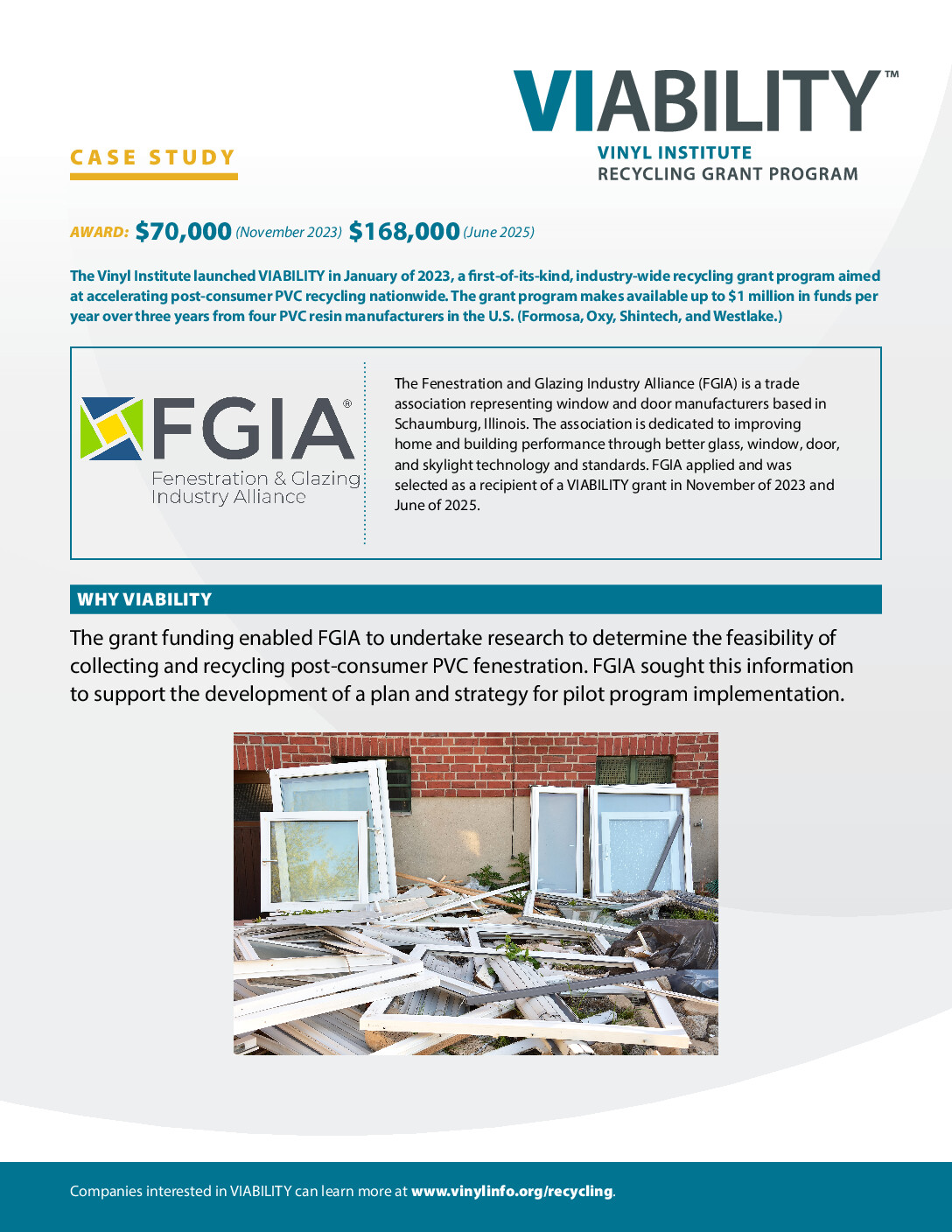
To help this growing focus on circularity, the Vinyl Institute and its main members have worked diligently to grow its post-consumer recycling program, VIABILITY. A commitment of $3 million over 3 years, the program is designed to award critical funding to organizations actively working to increase the post-consumer recycling of vinyl. The program has had numerous success stories already, which you can see below.