
This website uses cookies so that we can provide you with the best user experience possible. Cookie information is stored in your browser and performs functions such as recognising you when you return to our website and helping our team to understand which sections of the website you find most interesting and useful.

News
Vinyl Manufacturing and the Environment: A Sustainable Choice
TL;DR (Summary for Readers):
Vinyl manufacturing has significantly evolved. Over the years, it has embraced sustainable practices that reduce waste, improve recyclability, and support circular economy initiatives. Through innovations and advanced recycling technologies, vinyl manufacturers are minimizing environmental impact. Organizations like the Vinyl Institute are driving industry-wide sustainability efforts, proving that vinyl is a durable, cost-effective, and eco-friendly material for various applications.
____________________________________________________________________________
Vinyl is one of the most versatile materials used across countless industries, ranging from construction and healthcare to automotive and consumer goods.
Because of its extensive role, it’s often a bone of contention in many environmental discussions.
However, modern vinyl manufacturing is much more sustainable than most people realize. Vinyl manufacturers have been investing in technologies and processes that minimize waste, promote recycling, and support circular economy principles.
In this blog post, we’ll look at how US vinyl manufacturing is leading the way in sustainability/ We’ll debunk common myths about vinyl and demonstrate its benefits for a variety of applications.
Understanding Vinyl Manufacturing
Vinyl, scientifically known as polyvinyl chloride (PVC), is primarily made from two abundant resources: salt and natural gas. Vinyl is comprised of 57% chlorine, 38% carbon, and 5% hydrogen by weight.
Chlorine is extracted from salt through electrolysis, while separately, ethylene is derived from natural gas. The chlorine and ethylene are combined to create ethylene dichloride, which is then thermally transformed into vinyl chloride monomer (VCM). Through polymerization, VCM molecules link together to form the durable plastic known as PVC.
The cost to manufacture vinyl is influenced by several factors, including raw material availability, energy consumption, and technology investments. Due to the scalability of production, vinyl manufacturers can produce large volumes at a competitive cost, making vinyl an economical choice across industries.
Learn more about facts about PVC here.
Vinyl’s Environmental Footprint: Debunking Myths
Vinyl’s environmental performance has always been questioned. In this article, we’ll look into why negative reports about it are not true.
One of the most persistent myths is that vinyl is inherently harmful to the environment. In reality, vinyl’s exceptional durability contributes positively to sustainability.
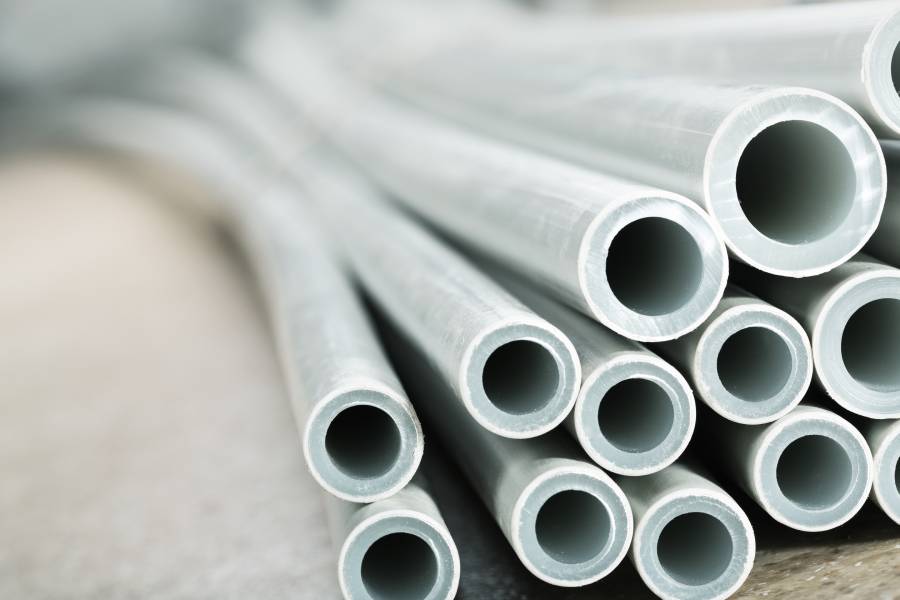
Products made from vinyl, such as flooring, pipes, and medical equipment, often have life spans exceeding 30 to 50 years. Durability reduces frequent replacements, which saves resources and lowers material consumption.
Vinyl recycling in the US has been a sophisticated and mature market for decades. Leading US vinyl manufacturing companies are taking measures to ensure post-consumer and post-industrial vinyl waste returns to the production cycle rather than ending up in landfills. Mechanical recycling allows vinyl to be processed multiple times without a significant loss in performance, and many durable vinyl products can incorporate recycled content, enabling a truly circular value chain.
Innovations in chemical recycling are also opening new pathways for a closed-loop system that reduces environmental impact, by enabling the recovery of high-quality raw materials from complex or contaminated vinyl-containing waste streams.
Plus, vinyl’s long lifespan leads to fewer product replacements, reducing resource consumption over time. In this way, vinyl contributes to sustainable manufacturing strategies.
Innovations Driving Vinyl Sustainability Forward
The vinyl industry is at the forefront of material innovation, continuously developing new technologies to enhance environmental performance.
Here are some of the most impactful innovations shaping the future of vinyl manufacturing:
Bio-Based Plasticizers
Traditional plasticizers used in vinyl production are derived from fossil fuels. However, leading PVC vinyl manufacturers now use bio-based plasticizers such as soybean oil and other plant-based materials.
These alternatives significantly reduce the carbon footprint of vinyl products while maintaining the flexibility and performance characteristics that consumers expect. The shift towards bio-based additives is a critical step in reducing dependency on non-renewable resources.
Energy-Efficient Production Technologies
The US vinyl manufacturing industry is investing in advanced machinery and automation systems that reduce energy consumption. Techniques like heat recovery, real-time process monitoring, and precision material handling have dramatically reduced the amount of energy required per unit of vinyl produced. Furthermore, as the electrical grid is decarbonized, chlorine production from salt is also becoming decarbonized [maybe include a link to the independent, critically reviewed Life Cycle Assessment of the vinyl industry published in 2025 which shows that the carbon footprint of PVC resin dropped by 12% in the last five years?]. This lowers operational costs and greenhouse gas emissions across the supply chain.
Closed-Loop Water Systems
Water usage is another key focus area for vinyl manufacturers aiming to minimize their environmental impact. A closed-loop water system recycles and treats the water used in production processes, thereby reducing overall water consumption. It helps conserve local water resources and prevent contamination. Manufacturing operations remain environmentally responsible.
Collaborative Sustainability Initiatives
The industry recognizes that sustainability is a collective effort. Many vinyl manufacturers partner with environmental organizations, research institutions, and government agencies to:
- develop best practices
- improve recycling infrastructure
- establish standardized environmental benchmarks
The Vinyl Institute leads numerous collaborative initiatives aimed at embedded sustainability at every stage—from design and production to end-of-life material recovery.
Luxury Vinyl: A Model of Sustainable Design
Luxury vinyl products, such as Luxury Vinyl Tile (LVT) and Luxury Vinyl Plank (LVP), are engineered using multiple layers that enhance performance, durability, and aesthetic appeal.
Sustainability in luxury vinyl also extends to indoor air quality. Many PVC vinyl manufacturers offer products with low VOC adhesives and coatings, contributing to healthier indoor environments. Additionally, luxury vinyl products often qualify for green building certifications like LEED due to their durability, recyclability, and responsible manufacturing practices.
Major vinyl flooring manufacturers have implemented take-back programs that collect old flooring for recycling into new products. Manufacturers can reduce waste and conserve resources by designing products with recycling in mind.
Vinyl, A Sustainable Material for the Future
Vinyl’s durability, cost-effectiveness, and recyclability position it as a sustainable choice for modern applications. Far from being an environmental burden, vinyl is a material that supports long-term resource efficiency when manufactured and managed responsibly.
Through innovation, collaboration, and a commitment to circularity, vinyl manufacturers are proving that vinyl can—and should—be part of a sustainable future. For industries seeking a resilient, eco-friendly material, vinyl remains an intelligent and responsible choice.
With organizations like the Vinyl Institute guiding the industry’s environmental efforts, vinyl manufacturing continues to evolve as a responsible and sustainable choice. The Institute’s leadership in policy advocacy, technological innovation, and environmental education reinforces vinyl’s place in a circular, resource-efficient future. For more information, contact us today!